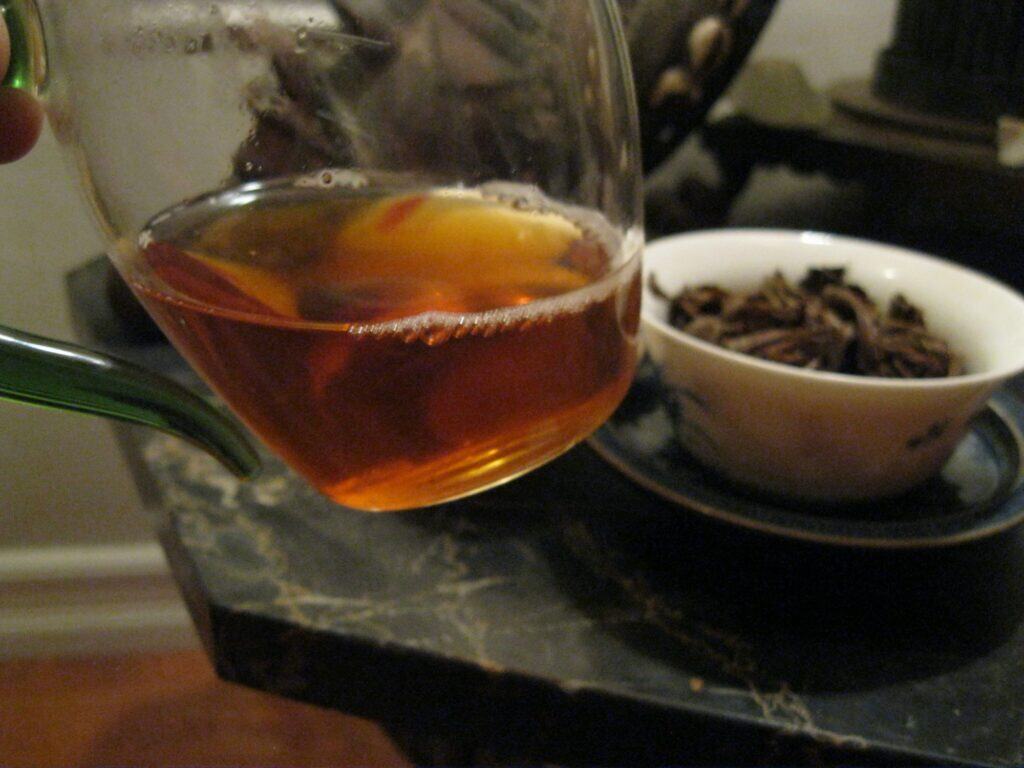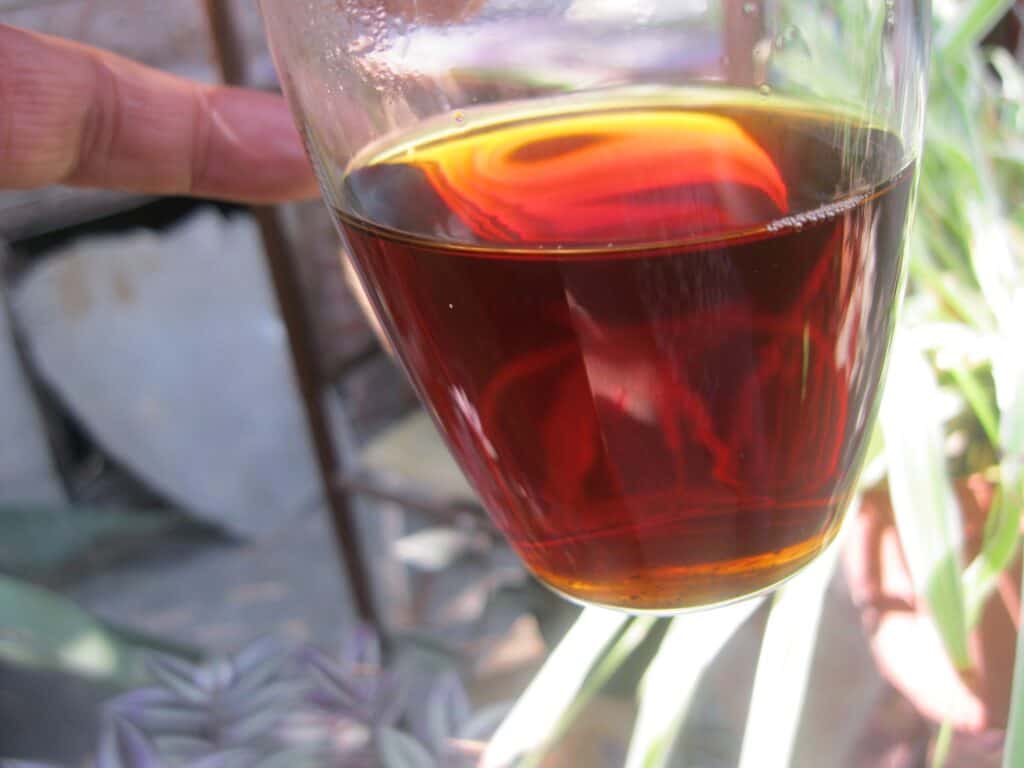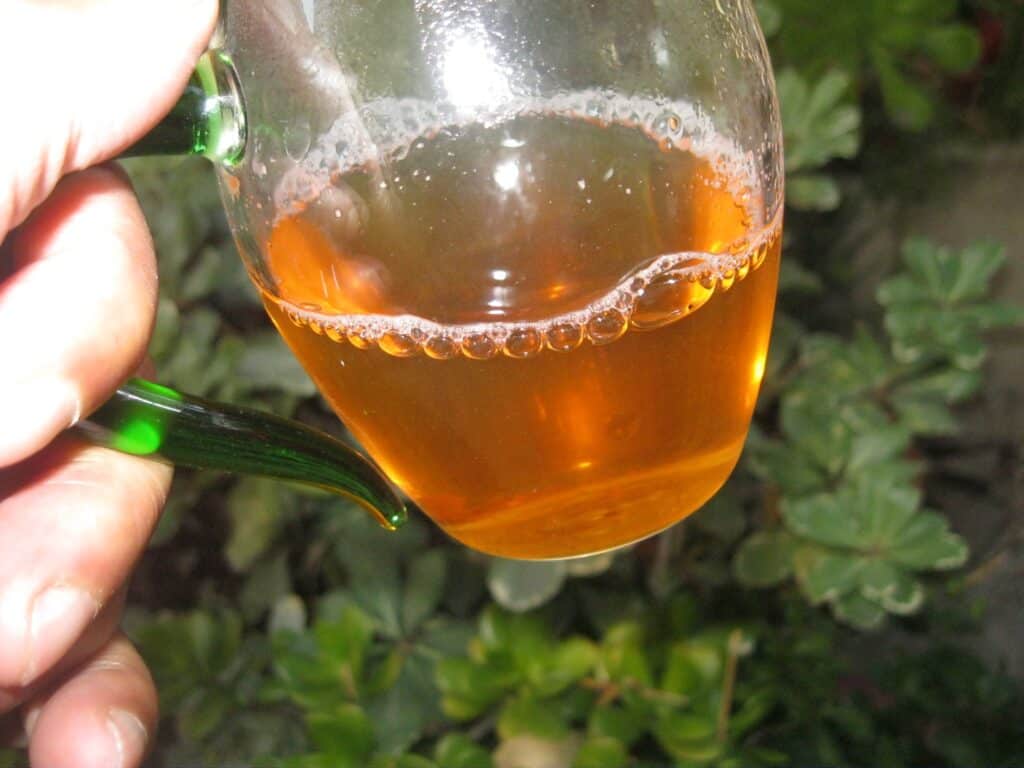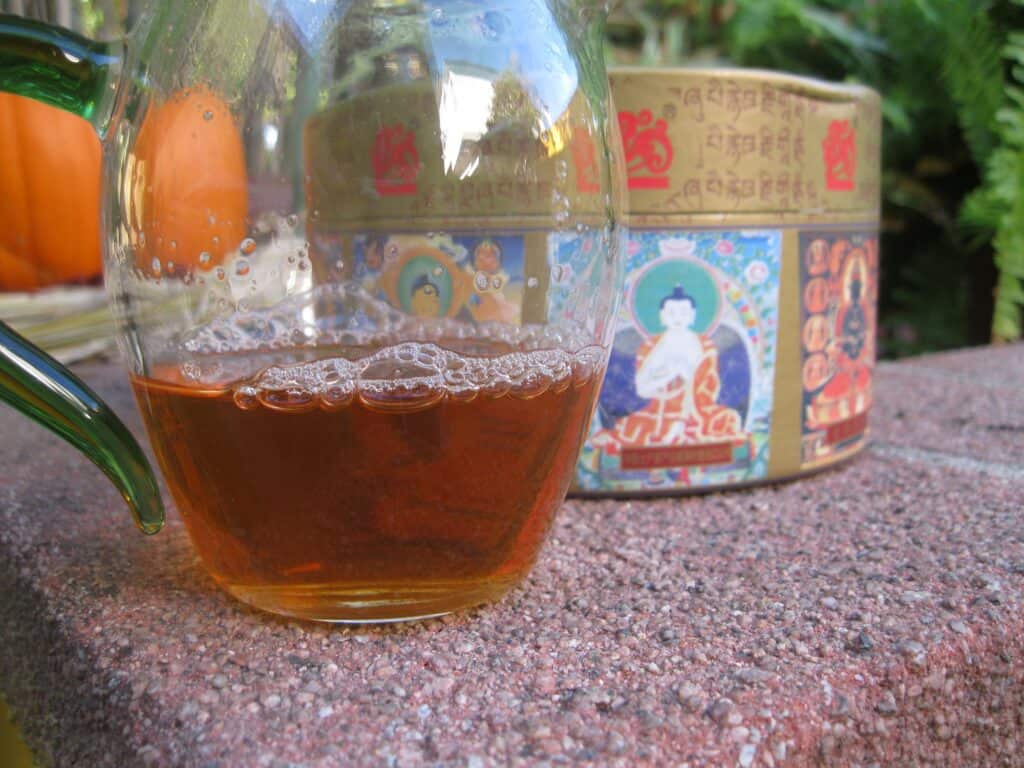
’07 Silver Peacock — Sweet Depth and the Confidence of a Nearly 20‑Year Cure
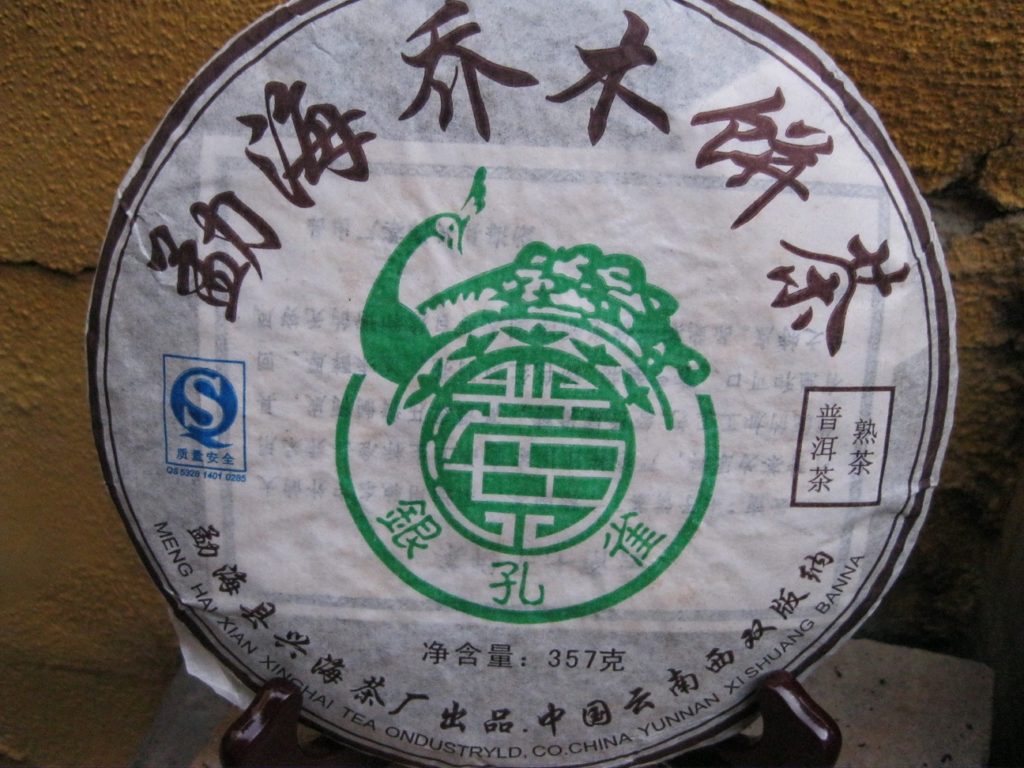
Lightly Fermented Ripe Puerh

The ’07 Silver Peacock carries the authenticity and tradition that define Xinghai Tea Factory, long nicknamed “Menghai Tea Factory #2″ for its lineage and processing discipline. Zhang Jianli — one of the Five Golden Flowers of Menghai Tea Factory — founded Xinghai with a clear intention: preserve Menghai craft while shaping a factory identity rooted in her own professional and regional background. The Hai in Xinghai signals that heritage directly.

Sweet, bready depth rises immediately, the kind of warmth that feels baked into the leaf itself. Perfect bitterness follows — firm, clean, and beautifully aligned with the cake’s mid‑aged character. The light fermentation, achieved through a shorter wet‑piling duration, gives the tea structure and clarity without muting the grain‑sweetness or the woody warmth.

The Silver Peacock arrives fully formed. Sweet bread. Perfect bitterness. A depth shaped but by nearly two decades of steady curing, where the material settles, integrates, and gains the quiet sweetness that only time can produce.  I stack this production giving two soaks of a minute-and-a-half, and a final of about five minutes.

  • 10-11g of ripe Silver Peacock in 150ml water
  • 1st infusion 1.5 min
  • 2nd 2 min stacked with first
  • drink.  Soak 3rd infusion 5 min

Enthusiasts who chase balanced mid‑aged sheng will feel the pull of this everyday treasure immediately. The cake offers sweetness with backbone, warmth with definition, and a calm emotional resonance that reflects both its lineage and its maker. It stands as a confident expression of Zhang Jianli’s craft — a tea with history, intention, and a clear sense of self.
Jingmai 003: A 20-Year Journey into Nuanced Puerh Sophistication

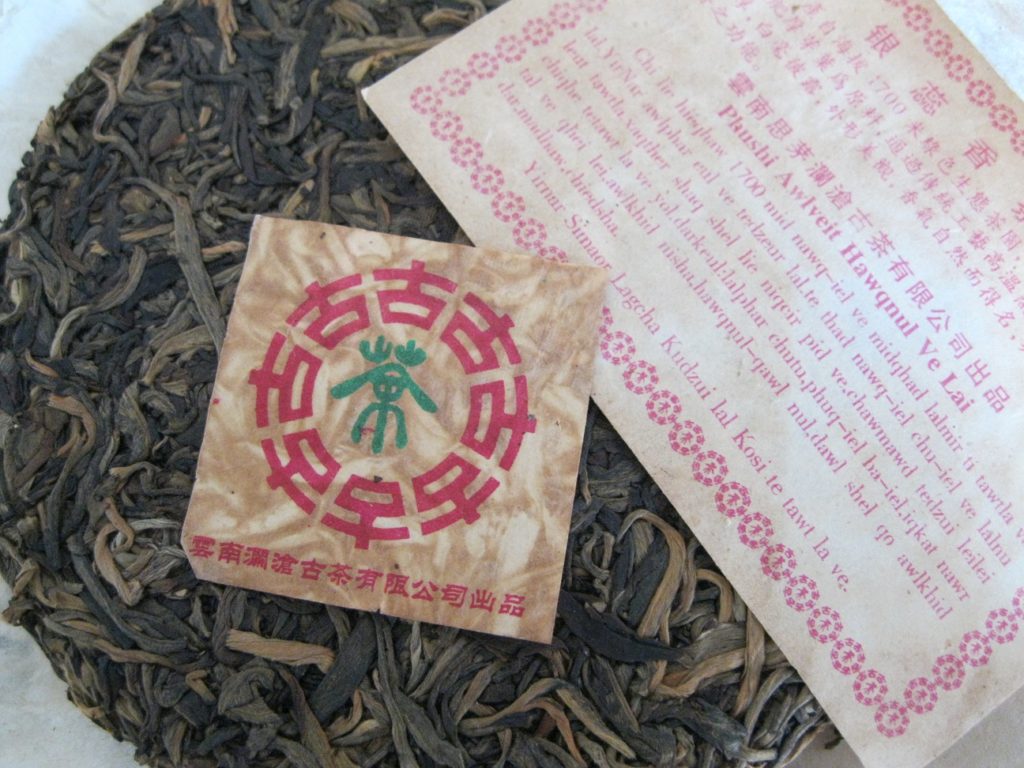
Jingmai puerh often suffers from reductive praise—its floral and fruity traits pigeonholed as “beginner-friendly,” greeted with a cutesy acclaim like a toddler’s first steps. But Jingmai 003 (JM003) defies such simplifications, offering a top-shelf experience that rewards seasoned drinkers and curious explorers alike.

🧭 Micro-Terroir and Material Specifics

While Jingmai’s reputation leans toward the accessible, JM003 showcases the region’s deeper potential. Its profile is shaped by:

  • Shengtai gardens (unsprayed, natural growth)
  • High-altitude material (1700m—unusually elevated for Jingmai)
  • Tree age and processing style reflecting old-school sensibilities

These factors contribute to a layered experience that transcends the “floral-fruity” stereotype.

📦 Size Variants and Material Differences

JM003 appears in at least two sizes: 125g and 357g. But they’re not interchangeable:

Version Year Composition Notes
125g 2005 Mostly silver buds Silver needle-like, light melon, no tippy aggression
357g 2007 Much lower silver bud ratio Pricing suggests closer kinship to ’07 than ’05 125g

The 125g version, in particular, opens with silver needle elegance and transforms over time into something far more resolute.

🌄 Transformation and Longevity

Now 20 years old (as of summer 2025), JM003 impresses with:

  • Longevity: At least 13 infusions;  any bottoming out give it a rest for a few hours or even till the next day
  • Mouthfeel: Voluminous, slick, sustained
  • Sweetness: Balanced by a sharp, bitter edge—classic Jingmai embracing the ethos of revolution

Bitterness here isn’t a flaw—it’s a philosophical statement. Sweetness is earned, not given.

🍵 Flavor Evolution: From Youth to Maturity

Gone are the silver needle traits. In their place:

  • Naka-like cucumber
  • Black pepper
  • Sweet chaparral grasses
  • Cotton candy accents

JM003 doesn’t just age—it evolves. It’s a Jingmai that raises gustatory eyebrows and deepens appreciation for the region’s terroir.


Langhe’s Ripe Revelation: Sweetness Perfected Through Stacking

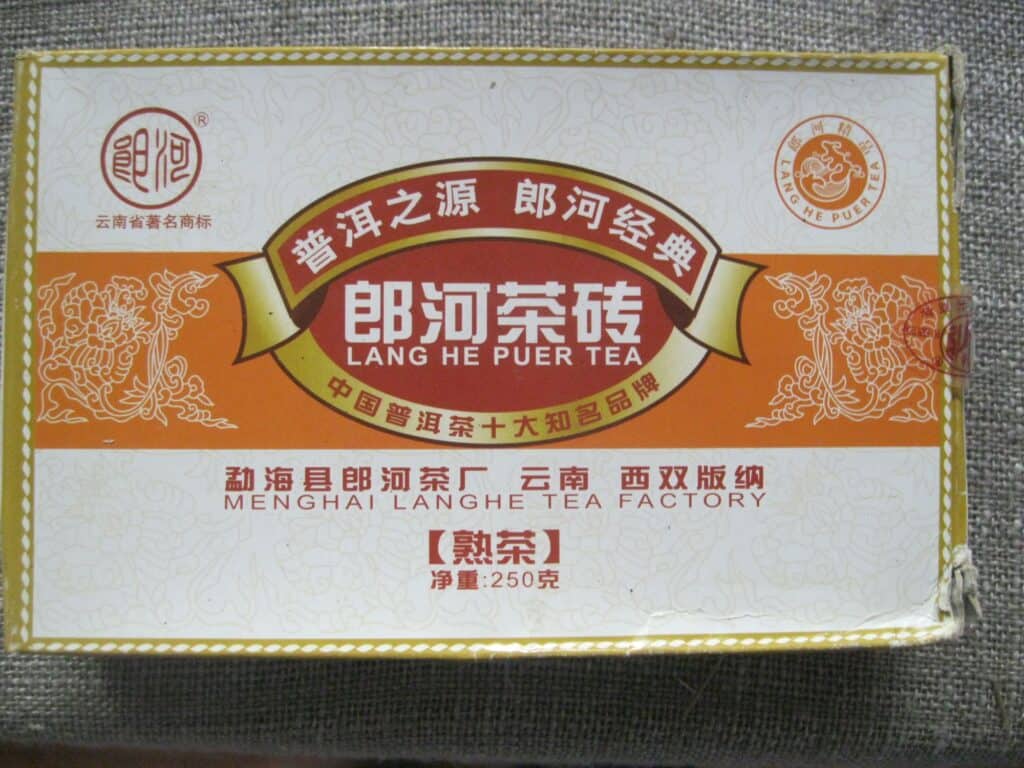
Langhe Tea Factory commands a strong reputation for its ripe puerh productions. In 2007, it earned a spot among the Ten Notable Puerh Tea Factories, joining the elite “Three Sea and One River” (三海一河) group alongside Menghai, Fuhai, and Xinghai. Langhe’s acclaim stems from its skillful light fermentation technique, which lays the foundation for complex sweetness and smooth texture.

Ripe puerh from Langhe requires several years of storage to reach peak drinking experience—this is when sugars fully emerge. However, achieving that peak also depends on understanding the unique traits of each production, including storage conditions and seasonal variation.

Discerning drinkers often consider the brewing landscape to unlock rarified puerh performance. When sweetness drops noticeably between the first and second infusion, stacking delivers the most balanced and consistent flavor. The Langhe Ripe Brick exemplifies this need.

This brick offers a light roast and a rich mélange of sugars evocative of dulce de leche, maltose, caramel, and toffee. Its sublime smoothness and minimal astringency set it apart from other ripe puerhs in the PJ Collection. While the sweetness fades quickly after the first infusion, stacking restores harmony across brews, elevating the overall experience.  Usually ripes exhibit some measure of bitterness, cocoa, or wood tones.  The Langhe Brick’s cocoa presents as super creamy milk chocolate with zero bitterness and slight wood tones.  The overall composition distinguishes itself through exceptional smoothness that is still rich and full.  Summer warmth maximizes its sweetness and depth.


Under the Spell of Snowy Florale

Snowy Florale continues to evolve most satisfactorily. At its current stage, sweetness and texture shine through more than ever before, casting a spell that bewitches with each infusion.

All the remarks in its product description—citrus and rose honey nose, expansive qi, cheek and tongue activation—remain true, but they’re now enhanced by a velvety sweetness. Experts recognize that MKRS offerings are known for their youthful astringency, yet Snowy Florale has gracefully crossed into a realm far beyond feisty bite. Its transformation reveals a tea that’s coherent, steady, and deeply satisfying.

From one steep to the next, Snowy Florale exhibits old-tree depth and balance, ideal for those who favor mid-aged raw puerhs untainted by heavy storage. Stored in Los Angeles since 2020, it retains clarity and vibrancy while remaining a harmonious brew.

Its true Lincang, Daxueshan pedigree excels in the huigan and retro-nasal stage of drinking. A resonating red rose finish combines with comforting ripe delicious apple and clover honey.  Throw in hints of thyme and hay.

For lovers of mid-aged sheng, Snowy Florale offers a delightful foray into MKRS’s mature side. It’s a sheng that rewards patience and invites reflection. Under its spell, one finds sweetness where once there was savory soy sauce and peanut brittle, and enveloping texture where once there was a wait-and-see attitude.


Macanese Mushroom Thermosed

Thermosing Ripe Puerh: The Macanese Mushroom Brick

Thermosing unlocks dimensions in ripe puerh that gongfu and grandpa styles won’t, particularly when it comes to light-fermented and laochatou. Time and heat transform the brew, profoundly transforming flavor and texture.

Puerh Junky recently updated the Light Fermentation page after revisiting the Macanese Mushroom Brick. Gongfu brewing highlights its dry mushroom savoriness and bitter front-end attack. But thermosing takes it further—here’s what emerges:

  • Sweeter and richer profile with umami savoriness as a subtle backend accent
  • Strong roast character with a lingering coffee-like finish
  • Faint mountain berry evolves into dense, sweet prune thematics
  • Room temperature reveals ethereal medicinal camphor

To get the most out of thermosing:

  • Brew for at least one hour, though overnight yields the best results
  • Use glass-lined or ceramic-lined thermoses, which retain heat better than stainless steel.  The taste seems truer as well.

Conclusion: Thermosing the Macanese Mushroom Brick reveals a bold, layered experience— roasty and rich, with sweet prune thematics,  It completely transforms from its gongfu presentation.


Zhang’s Signature: Star Anise & Amber Depth

Zhang’s Signature explores a standout patch in the vast Bulang terroir, delivering a character that defies expectations. While Bulang teas often earn their reputation for bitterness, not all fit that mold. Some offer a rock-sugary Zen. Others—especially early spring harvests—exhibit floral traits reminiscent of Yibang, an Yiwu mountain, and the Lincangs from Daxueshan and Xigui.

The Bulang region, sprawling and diverse, includes mountains like Laoman’e, Hekai, and the storied Laobanzhang. This breadth makes “Bulang” one of the most generic labels in puerh, not in terms of quality but in predictability—just as vague as saying “Menghai.”

A Summer Evolution of Zhang’s Signature

In spring 2025, Zhang’s Signature revealed bold notes of Yunnan Gold, echoing black tea intensity. Now, in summer, it pivots: the leaves channel star anise and fennel vibes, akin to Tiger CM/S, Cherub’s Bile, and the erstwhile Quincy.

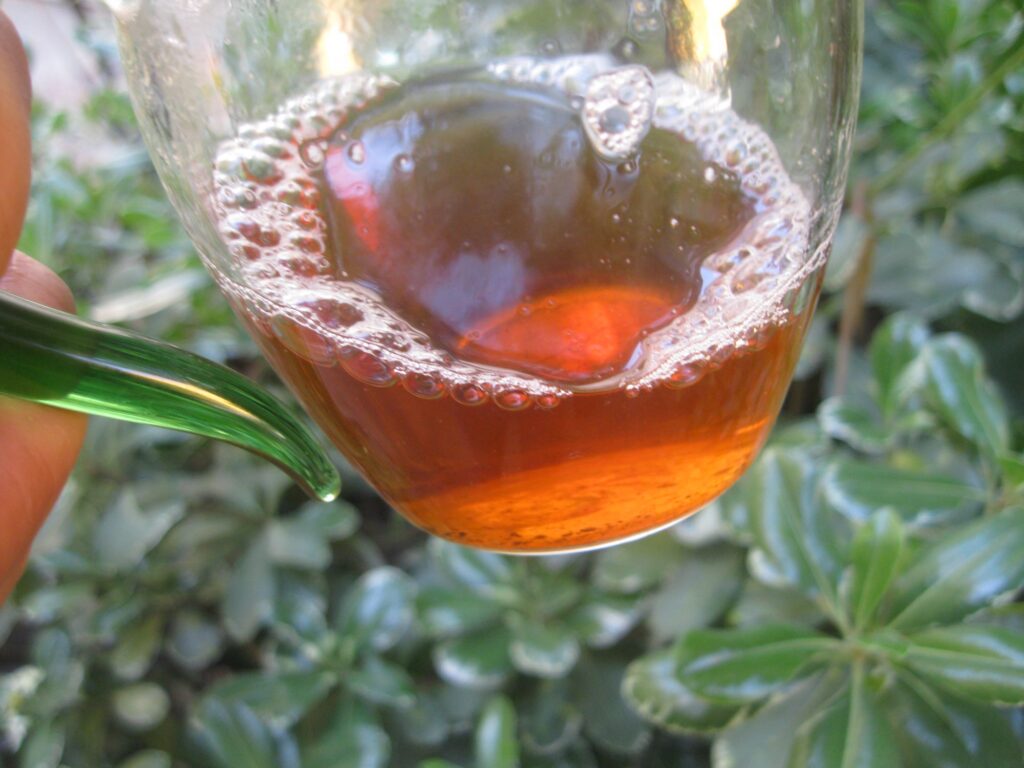
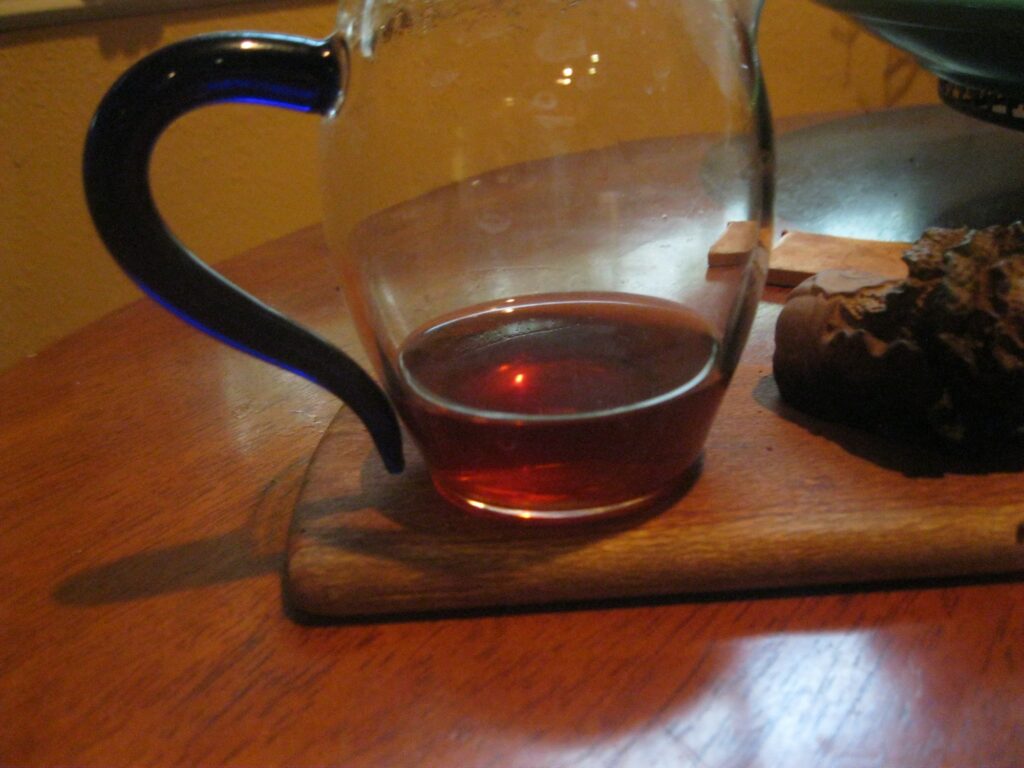
The balance impresses. Sweetness shows up without excess, dancing alongside Xinghai’s assertive astringency. Liquor clarity also earns a nod, with its rich, dark amber hue, appropriate for its mid-aged puerh status.

Brewing Notes for Mid-aged Raw Puerh

Compression from this 2007 production feels moderate, avoiding the ultra-dense atomic mold. While infusions may take slightly longer, steeping remains manageable.

  • Start with a waking soak of 30+ seconds
  • Follow with 15 minutes of rest
  • First infusions reveal sweeter tones with longer wake times (2–3 hours proves worthwhile)
  • Letting the cake air out for a day or two enhances character

For optimal results, keep the water temperature under boiling. Puerh Junky recommends brewing raw puerh at 96°C / 205°F to amplify the tea’s natural sweetness and nuance.

🔚 Final Pour: Zhang’s Signature Distills the Unexpected

Zhang’s Signature challenges the notion of what a Bulang raw puerh should taste like. While the region often evokes bitterness, this cake carves its own lane—showcasing sweet clarity, a fennel-forward twist, and a brewing depth that rewards patience. From the star anise whispers to the amber liquor and measured compression, it delivers a mid-aged experience that surprises without straying from the Xinghai boldness that die-hards appreciate.

For raw puerh lovers chasing complexity, this one’s a masterclass in how terroir, time, and technique converge.


Red Mark Mandala: A Mid-Aged Puerh That Blooms in Summer

Red Mark Mandala shines especially bright during warm weather. With over 18 years of age behind it, this mid-aged Menghai-region puerh reveals a softness and sweet clarity that continues to evolve—making it a standout for summer sipping.

Unlike the original Red Mark cake, which derives solely from Yiwu material, Red Mark Mandala blends leaves from three different Menghai terroirs. As such, one would expect a bit of aggressive smacking around, but it possesses some of the same Yiwu smoothness—minus the signature vanilla—while upstaging Yiwu in elegance.

Shot from the Puerh Bible

There’s a glassy, classy Zen that’s now taking on some of the classic puerh traits– petrol, diesel, and camphor in particular.  Yet the notes never sound forcefully.  Everything is sheer elegance.  Each note glides in with grace, adding depth without disrupting balance. Let’s not neglect its dashing clarity.

The aftertaste now carries more conviction, thanks to its steady maturation. How these traits emerge over time never fails to impress.  For huskier productions to age into such complexity isn’t beyond reckoning, but when Zen evolves in this direction it’s a true marvel of nature.

🫖 Brewing Tips for Red Mark Mandala

Given its compression and genteel nature, definitely neither shyness about infusion times nor apprehension toward generous leafing are warranted. It avoids bitterness, never crashes at the base, and remains inviting throughout multiple steeps.

Final Pour: Summer’s Ideal Aged Puerh

Red Mark Mandala continues to age with quiet brilliance.  Its clarity dazzles, its structure deepens, and its flavor unfolds with each passing season.  The summer draws out its sweeter, side, while time uncovers the camphor and petrol waiting beneath.

Butter Tea Morning Ritual: A Fat-Fueled Start to the Day

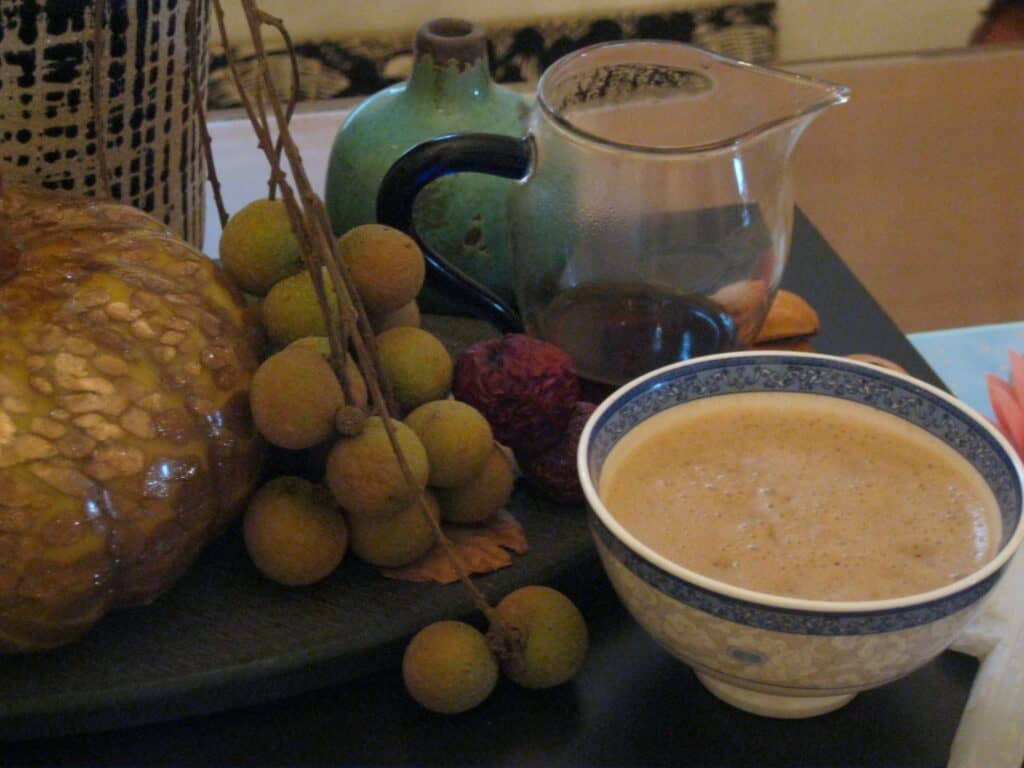
I start my mornings with milk tea—often called butter tea—inspired by its Tibetan origins. While popularized through additions like butter or MCT oil in coffee, this variation uses tea as its base. It’s a satisfying meal in itself, delivering energy through saturated fats, which offer sustained fuel throughout the morning. While many criticize saturated fat and cholesterol, that debate belongs to another time. For now, let’s keep the focus on the tea.

For several months, I paired my butter tea with sausage. Surprisingly, that combination triggered hunger much faster than butter tea on its own. When I drank it solo, I remained full and mentally sharp for four or five hours—a clear difference. At first, I assumed my body had simply built a tolerance, as tends to happen over time.

Then, for no specific reason, I went back to butter tea alone last week—and have continued ever since. Right away, I noticed the return of that original clarity, energy, and appetite control. It got me thinking: what caused the diminished effect when sausage entered the picture?

Cue a recent study exploring what some call the “sugar diet”—a trending approach where participants surprisingly lost weight while increasing sugar intake. While weight loss is just one marker of health, the findings might help decode why butter tea worked better on its own. Of course, my goal isn’t weight loss. I drink butter tea to boost fat consumption and counter oxalates, similar to the way spanakopita combines fat with oxalate-rich greens.

The “sugar diet” boils down to a protein-restricted diet. One recent study showed that limiting protein while consuming a high-sugar intake led to weight loss. Although the study didn’t track fat intake, it likely remained low. Curiously, these favorable results mirror those found in carbohydrate-restricted diets. If both data sets hold water, they suggest an intriguing conclusion: restricting either carbs or protein can promote weight loss—but doing both invites entirely different metabolic consequences.

This idea isn’t new. For decades, food combining philosophies have warned against consuming carbohydrates and proteins in the same meal. Digestive enzymes for each macronutrient differ significantly, and they function best at different pH levels. Protein digestion thrives in a far more acidic environment than carbs. When both arrive in the gut simultaneously, they may confuse the digestive system, compromising the breakdown of each.

Consider butter tea. Its staying power as a fat-fueled carb drink seems to last far longer when consumed on its own. When I added sausage—a protein—the hunger-suppressing effect vanished. This observation echoes the sugar diet findings, at least if satiety serves as a reliable indicator.

Studies often overlook fat as a variable. Research on protein and carbs rarely controls for dietary fat, and studies on fat often neglect macronutrient pairing altogether. Butter tea operates differently. Most of its calories come from fat, with only trace carbohydrates from milk or dried fruit. Tea itself barely contributes carbs. From my N=1 experience, this carb-fat combination delivers powerful hunger control and a noticeable mental lift—without the need for protein. Since I kept caffeine constant, I can’t pin the boost on that alone, though it’s worth exploring whether caffeine interacts differently in the presence of protein. Perhaps others have also noticed that caffeine hits harder when not paired with protein-heavy meals.

Of course, tea’s molecular complexity introduces a host of other variables, many beyond the scope of this reflection. But in the case of butter tea, fat—not caffeine—serves as the principal energy source. Puerh tea in particular tends to stimulate hunger when consumed alone. Interestingly, traditional knowledge holds that ripe Puerh tea helps the body metabolize fat. That might explain some of its remarkable effects on hunger when paired strategically with fat-rich ingredients.

Make your Butter Tea with Puerh Espresso: simply and hasten the process.


’98 Manzhuan Storage Brief

Our first post of the New Year begins here on the fifth day (初五) of celebration with the ‘98 Manzhuan Storage Brief.  Its journey offers some valuable insights into the particularities of storage, heavily stored productions in particular.  As most readers are well aware, Guangdong storage presents with a profile that tends to be dirtier than productions stored in Kunming.  This is due to the humidity of Guangdong and the taste preference of the region, which also includes HK, Taiwan, and Malaysia.  The oft-used term “Guandong dry storage” can vary from one vendor to the next, some imparting very little humidity and others quite a lot.  In largely sharing with the Mainland preference for drier storage, the Puerh Junky nonetheless holds a nuanced perspective toward humid raws, which shall be elaborated upon below.

Humid Raw Complexities

The ’98 Manzhuan introduces some of the complexities intrinsic to humid raws.  These complexities involve how deeply humidity has penetrated the material as a result of the intensity and duration of applied humidity.  Obviously, these factors greatly impact expression.  Some storage can act as a countervailing force fine tuning the effects of heavy humidity.  It took about six months for the Manzhuan to recover from its original storage home.  Though the humidity was clearly quite penetrating, at the same time it was clear that the intensity of storage did not adversely impact the material as the expression was sweet and lively.  This does not happen when a production is subject to intense humidity over a protracted period or scorched into appearing older than it is.  In both instances the tea tends to lose all signs of life.

With junkacious sagacity (ahem), I placed my “at the ready Manzhuan cake” in mylar unsealed along with other Yiwu productions, including an even more wickedly humid production from David Lee Hoffman acquired around the same time.  This is where the music takes a precarious foreboding tone for this is when the Yiwu box took on a decidedly heavier aroma, all within more or less innoculated with eau de dank.  It’s my suspicion that the main culprit was the DLH production; just a whiff of it today turned my stomach. . .  and it’s been out of the box and in the open since early Nov ’24!  That was also when I removed the Manzhuan from the Yiwu box, as its developing trajectory did not compare favourably to the year prior.

Frozen In Time

There’s a particular misnomer that given X and Y conditions that one can keep their productions frozen in time.  This is not too likely.  However, there is the possibility for evaluating the effects of storage and modulating accordingly within certain parameters.  In the mylar and Yiwu box, the Manzhuan became less ebullient and more bland, exactly as if it had been subjected to too much humidity for too long.  This is what informed my taking it out of the box, and when things did not improve at the beginning of Jan ’25, it parted from the mylar as well.

The results on this 5th-day of the New Lunar Year are far better than satisfactory:

  • the humid notes are mostly an afterthought;
  • there’s full sweetness;
  • the peach taste is uninhibited;
  • Additionally, the broth is thick.

Some previous tastings may have been just as thick, but the lack of sweetness along with the very pronounced humidity possibly distracted from appreciating this.  Of curiosity is whether its storied storage path in any way contributed to any of it current glories. It’s hard to say.  It’s worth noting that the Manzhuan stash is not being stored in mylar but a stash box and given tastings therefrom, it appears that air flow factors significantly in producing the favourable results reported above.

Conclusions

In evaluating the ’98 Manzhuan these past few years, I’d venture that mylar isn’t the very best for humid productions if the desire is to bring out the most sweetness while lessening humidity.  Sweetness and humidity may be inversely related provided conditions resembling those here in Los Angeles.  There is a term called “tuicang” (退仓) which refers to post-humid storage specifically geared toward minimizing wet character.  It’s probably the mark of a more finished product.  Certainly since Nov ’24, the Manzhuan (from the “at the ready” Yiwu box) could be considered to have been undergoing tuicang.

Finally, the Manzhuan Storage Brief would be remiss were it not to highlight that this heavier Guangdong storage has not adversely affected the underlying spirit of the material, which is sweet, fruity, lively, and thick.   Also as a complete sidenote, it’s worth mentioning that the appearance of Manzhuan is very much in the old-school vein, rather similar to all other terroir before the wispy whole-leaf style became the trademark of Yiwu offerings around ’04.  You can gander here.  Cashed leaves.

Willie Pueronka

Willie Pueronka.  Dat ole mystery list of flavours evoking a sense of the time when I delivered papers for the Fairfield Ledger, back when it was a daily, back when they delivered papers.  This time it’s Chameleon’s “banana.”  It’s not the real taste of banana, but it is the real taste of Willie Wonka’s Wacky Wafers.  Of course, Chameleon is not sweet like that.  Though it screams “banana flavour”, it’s blended in a sophisticated grown up way, like banana bread.   No foolin’.